Services

Hot Insulation

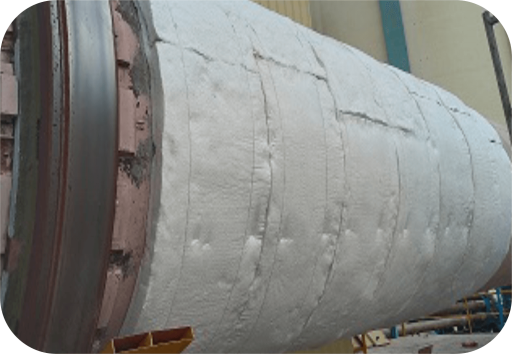
Hot insulation must be selected primarily for service temperature, thermal conductivity, mechanical requirements, and installation constraints; combustibility, moisture resistance, and chemical compatibility are also critical for industrial systems. Mineral/rock wool and fiberglass are economical choices for temperatures up to several hundred degrees Celsius and are widely available; mineral/rock wool is noncombustible and offers good fire performance. Ceramic fiber is commonly used for very high‑temperature applications (kilns, furnace linings) because it tolerates temperatures above 1200°C and has low heat storage, though it is more friable and typically requires protective facings or binders. Calcium silicate provides rigid, load‑bearing

Cold Insulation

Cold insulation must control heat ingress, prevent surface condensation and frost, manage moisture, and withstand mechanical loads while meeting required fire performance and long‑term durability. On cold surfaces, continuous vapor control is essential to prevent condensation, corrosion under insulation, and freeze damage; closed‑cell elastomeric foams and other closed‑cell materials are commonly specified because they limit moisture ingress and reduce surface emissivity. Rigid boards and composite panels are preferred for flat surfaces and large panels where dimensional stability and compressive strength are required. Flexible tubes, sheets, and pre‑formed sections are appropriate for piping, ducts, and irregular geometry because

Cryogenic Insulation

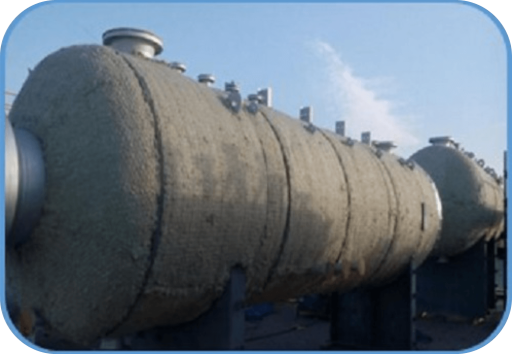
Cryogenic insulation selection must balance thermal performance, mechanical robustness, installation practicality, and lifecycle cost. Perlite combined with glass‑fiber resilient blankets is a long‑established, economical annulus fill for vacuum‑jacketed systems and bulk storage because it provides reliable thermal resistance with simple installation and repairability. For applications demanding lower boil‑off or minimal heat leak, Vacuum Insulation Panels (VIPs), aerogel‑based materials, and high‑performance closed‑cell foams offer successively better thermal performance but introduce tradeoffs in cost, handling, and durability. Material Max service temp Thermal conductivity Typical form Key advantage

Acoustic Insulation

Acoustic insulation reduces sound transmission by adding mass and damping and improves sound absorption using porous materials. In building and industrial applications, high‑performance assemblies combine porous absorbers (mineral wool, fiberglass) with mass/damping layers (mass‑loaded vinyl, heavy boards) and resilient mounts (channels, clips) to maximize both STC (sound transmission class) and NRC (noise reduction coefficient) performance Material Typical STC impact NRC / absorption Typical form Key advantage Rock wool / Mineral wool +3–8 STC (with cavity fill) 0.8–1.2

GRP / FRP Insulation

GRP/FRP insulation comprises an unsaturated polyester resin matrix reinforced with 450 gsm chopped strand mat (CSM), finished with a pigmented gel coat, cured using MEKP catalyst, and managed with liquid paraffin wax for mold release and surface finish control. The laminate provides a corrosion‑resistant, lightweight cladding suitable for insulated vessels, ducts, and housings where chemical resistance and weather protection are required.       Material Primary function Typical form Key processing notes Unsaturated polyester resin Matrix; chemical/thermal resistance Liquid resin; pre‑accelerated grades

Fire Protection Insulation

  Fire‑protection insulation is a passive fire protection layer that combines thermal resistance, non‑combustibility, and mechanical durability to limit flame spread and maintain loadbearing capacity during a fire. Further it limits flame spread, controls heat transfer to structural elements, and helps maintain loadbearing capacity for the required rating period. Selecting proven materials and tested assemblies is essential to meet building codes and process‑plant fire ratings.   Material Fire behavior Thermal conductivity Typical form Key advantage Mineral wool Noncombustible; retains integrity

Metallic Cladding

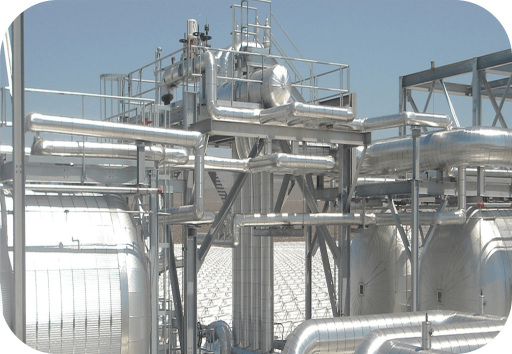
Metallic Cladding over insulation is a mechanical and environmental barrier that preserves thermal performance, prevents moisture ingress, and provides mechanical protection and aesthetics. Key design drivers are vapor control and CUI prevention, attachment strategy through the insulation (minimizing thermal bridging), mechanical loads and impact resistance, and compatibility of metals and fasteners with the insulation and substrate. Specify continuous vapor barriers or factory‑laminated moisture barriers where CUI risk exists, and design cladding supports to limit compressive loads on the insulation and to allow drainage and ventilation where required.   Key design considerations Vapor control and CUI prevention: - Specify continuous

Nonmetallic Cladding

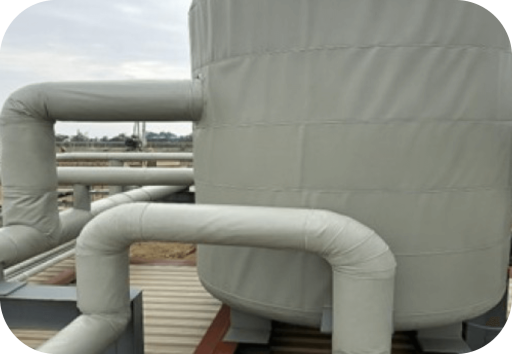
Non‑metallic claddings are flexible or semi‑rigid coverings applied over thermal insulation to protect the insulation and substrate from moisture, mechanical damage, and UV exposure. They are specified where metal cladding is unsuitable—chemical or highly corrosive environments, complex geometries, or where corrosion under insulation risk must be minimized. Systems are available as factory prefabricated kits or field‑applied membranes and fabrics to suit access, geometry, and maintenance needs. Material Weight Corrosion resistance Typical finish Key advantage Elastomeric coatings Low High